
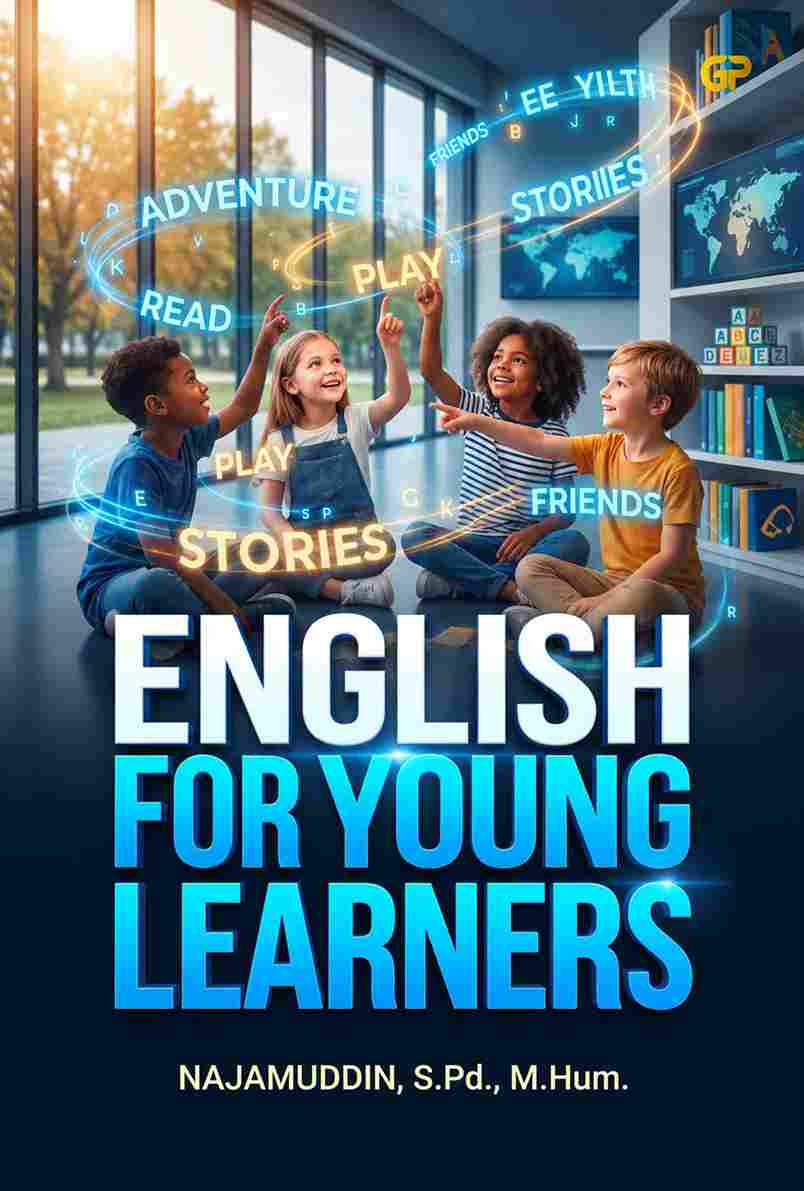
English for Young Learners: Theoretical Foundations, Methodological Innovations, and Pedagogical Applications offers a comprehensive, evidence-based exploration of early childhood and primary English language education. Grounded in developmental psychology, cognitive neuroscience, and applied linguistics, this reference text systematically bridges the divide between theoretical paradigms and classroom practice. The volume analyzes how young children acquire second and foreign languages through constructivist, sociocultural, and neurodevelopmental trajectories, establishing rigorous frameworks for communicative, task-based, and play-centered instructional methodologies.
Special emphasis is placed on emergent multiliteracies, oral language architecture, systematic phonemic instruction, multimodal narrative integration, and interdisciplinary models such as Content and Language Integrated Learning (CLIL). Furthermore, the text addresses contemporary issues in the field, including screen-time optimization in digital learning environments, differentiated assessment paradigms, culturally responsive pedagogy, and the decentralization of native-speaker norms in favor of Global Englishes and translanguaging practices. Designed for teacher educators, researchers, postgraduate scholars, and instructional leaders, this work synthesizes contemporary empirical research to cultivate inclusive, linguistically rich, and developmentally responsive language ecosystems for young multilingual learners.






Ulasan
Belum ada ulasan.